Showing posts with label Yahoo. Show all posts

Friday, 10 April 2015

The Advanced SEO’s Guide To Mobilegeddon

If you're so far ahead that you've scoffed at other articles about preparing for Google's upcoming mobile algorithm update, columnist Bryson Meunier has tips on taking it to the next level.

As someone who has been warning business owners about the upcoming mobile update since at least 2009, I have to say that the advice latecomers are getting in many blogs today seems kind of basic to me. Get a mobile site? Really? True, it’s necessary — but do we really need experts to tell us that?
It’s clear that many people do, unfortunately. Portent recently crawled the top 25,000 sites and found that 40% of them are not mobile-friendly. Yikes.
As I wrote last month, this may be intentional. Many webmasters may have de-prioritized mobile because of the apparent lack of potential traffic lost, given that their audience accesses content primarily on desktops. Or, it could be because they’re not aware of what’s obvious to a lot of us who have been in the game for a while.
But what if we already have a mobile-friendly site and we’re looking to the future? What can we learn from Google’s actions here that will help us on April 21 and beyond? As I see it, there are basically three things:

1. Focus On Improving The Mobile Searcher Experience

I’m reminded of an old video Matt Cutts made where he suggested we change not the name of SEO, but what it stands for — from “Search Engine Optimization” to “Searcher Experience Optimization.”
Google needs to create a better experience for their users than competitors like Bing and Facebook; if they don’t, they become Hotbot or Lycos as users migrate to other services they enjoy using more.
People access content differently on their smartphones and don’t want to have to do extra work because they happen to be searching on a smartphone. Fixing this and improving the mobile searcher experience is at the heart of this update.


Slidejoy Snags $1.2 Million To Put News And Ads On Android Lockscreens

While some among the handful of startups exploiting the revenue-generating opportunities that come from using an Android phone’s lock screen as an advertising medium have since refocused their efforts, one of the early movers in this space,Slidejoy, has just closed on its first round of funding. With $1.2 million in outside investment, Slidejoy will now continue to develop its app that rewards Android users for renting out their lock screens to become interactive newsfeeds that also feature various promotions.
The app, which is just over a year old and now has hundreds of thousands of downloads, displays a news story or some sort of ad or deal every time you check your Android phone. You can slide to the right to ignore the card and go to your home screen as you would normally, or you can slide to the left to get more information on the card shown. You can also slide up to see an additional card, if you choose.
Unlike competitors in the lock screen advertising space, Slidejoy has been pursuing a slightly different business model. Its users receive a flat rate in “rent” from the startup, so it doesn’t matter how many news stories or promotions they click.
“If we rewarded our users for every impression or click, then we’d just be inviting abuse and false leads for our advertising partners, a bad look for everyone,” explains Slidejoy CEO Robert Seo. “By giving a flat rate to users, Slidejoy is able to balance keeping users happy while providing quality leads to our advertisers,” he adds.


Thursday, 9 April 2015

Pew Research: Facebook Is Still Tops Among U.S. Teens

Facebook is used by 71% of Americans aged 13 to 17 according to Pew Research Center survey. Instagram is used by 52%, Snapchat by 41%, Twitter and Google+ by 33%.

Think the kids are no longer on Facebook? You should think again.
Facebook remains the top social media choice among U.S. teens, by a wide margin, according to a new study by the Pew Research Center.
The study found that 71% of Americans ages 13-17 use Facebook, defying conventional wisdom that the younger crowd isn’t using the social network. In fact, teens are using Facebook at the same percentage level as U.S. adults, according to another Pew Center study.
Where the kids differ is in their other social media choices. While adults look more to LinkedIn and Pinterest, teens prefer Instagram and Snapchat. Fifty-two percent of the nationally representative sample of 1,060 reported using Instagram and 41% Snapchat. Twitter (used by 33%), Google+ (33%), Vine (24%) and Tumblr (14%) were the only other social networks the survey specifically asked about.
Facebook is more popular with older teens. Fewer than half (44%) of 13 year olds reported using the network, compared to 77% of the 14-17 age group. Household income also plays a factor in Facebook use; 77% of teens from families earning less than $50,000 annually said they use Facebook, compared to 68% whose families earn more.
Instagram is especially popular with girls; 61% said they use the photo and video sharing site. Boys’ reported use is 44%, dragged down by the youngest part of the cohort, only 33% of 13 to 14 year old boys said they use Instagram.

5 Tips to Leverage Yahoo Gemini for Mobile PPC

The story for Yahoo continues. What chapter of this book we’re on, I don’t know - I’ve lost track. When Yahoo and Microsoft inked the Search Alliance deal, Yahoo’s position as innovator in the world of PPC all but evaporated. Sure, Yahoo still had its premium display, but that was it.
Fast-forward to the present. Search Alliance is still intact. In fact, Yahoo found a way to contribute more to that partnership through its deal to become the default search engine within Mozilla Firefox. Through all of this, Yahoo has somewhat quietly been rolling out the Gemini platform. We’re more than 1.5 years into the Gemini experiment, and it has emerged as an intriguing channel that is a hybrid of mobile search PPC and native advertising.
You may be asking, "But John, Yahoo is locked into the Search Alliance! It can’t do its own PPC platform." Yes, yes it can. Yahoo has new Web property in the form of smartphone and tablet apps that came about after the Search Alliance. This is where the mobile PPC portion of Gemini lives. Now there is a real third option for mobile PPC outside of AdWords and Bing Ads.
Without further ado, here are five tips for getting the most out of Yahoo Gemini for mobile search PPC:

1. Choose Keywords, Not Audiences.

Because Gemini is a hybrid of mobile search and native advertising, there are multiple targeting features as your disposal. You are set to target both search and native by default, so you have to take an extra step to isolate mobile search ONLY.

2. Match Types!

It isn’t immediately obvious within Gemini that you can use match types, but they’re in there. I promise. Broad, phrase, exact, and negative. Whew! For those PPC old timers, you’ll need to dust of your minus (negative), bracket (exact), and quotation mark (phrase) keyword entry skills. Throwback to the max!

3. Bulk Upload.

Using spreadsheets is a staple in the digital advertising world. That being said, desktop editors and third-party managers have taken over as the management tool of choice among most advertisers. Regardless, bulk editing via spreadsheets is still better than ZERO bulk editing (*looks at LinkedIn Ads*). With this feature, you can quickly sort out keywords, match types, keyword bids, and ad copy.

4. (Slightly) Longer Text Ads.

At this point we’re all used to 25 characters for a headline, 35 and 35 for the two lines of body copy, respectively. These are PPC absolutes (if there is such a thing). Gemini gives us just a bit more to play with. Fifty characters for the headline and 150 for the body. I’m still testing if and where Yahoo is truncating this copy - so proceed with caution by testing longer copy and shorter copy that mirrors what you run in AdWords or Bing Ads.

5. Conversion Tracking.

This was a feature that was a glaring omission in Yahoo Gemini v1.0. Consider that gap filled. And it works, too! Take advantage of this to simplify conversion-based optimization for your keywords and ads.

Link Risk Management: Are You Using This Critical SEO Tactic?

Columnist Stephan Spencer warns that if you don't regularly monitor your backlinks and proactively get rid of spammy ones, you could be risking it all.

Over the past five years, Penguin is arguably the Google algorithm update that’s had the greatest impact on webmasters. Since Google launched the first Penguin update in April 2012, hundreds of thousands of sites around the world have been penalized and have virtually vanished from the Internet (or at least their traffic has).
Webmasters the world over scrambled to clean up dubious links pointing to their sites. Even after going through this stressful, time consuming, and oftentimes frustrating experience, webmasters continue to search for more efficient and effective ways to keep their websites from getting caught in Penguin’s crosshairs as Google continually re-defines what constitutes a “good” link.
One vital concept in keeping your sites or your clients’ sites safe from the dreaded Penguin is that of managing the levels of risk within your backlink “portfolio.”

Introducing Link Risk Management

Link risk management is a natural outgrowth of the changes that have affected SEO in the last few years.
SEO is not just an investment in better visibility and higher rankings. SEO is the primary way to protect your Internet “assets.” Unfortunately, just like in most other spheres of life, people tend to wait for something bad to happen before they do something to protect themselves.
Do you really want to go through all the stress, time, and cost of recovering your site from a Google penalty? My advice would be, “better safe than sorry.”

Bing Ads Adding Support For Upgraded URLs

The roll out will occur in two stages: one for AdWords imports and a second for full availability within Bing Ads.

In response to Google AdWords’ roll out of Upgraded URLs, Bing Ads will soon be adding support for the new tracking parameter feature to ensure a smooth process when migrating campaigns from AdWords.
In a blog post Tuesday, Jamie Chung, program manager at Bing Ads, said support for importing Upgraded URLs from AdWords will be available by early May.
The feature will then be available within the Bing Ads platform by the end of summer 2015.

When advertisers import their campaigns, Bing Ads will use any existing AdWords tracking templates to create a destination URL for Bing Ads. Note that Bing Ads cannot import URLS with custom parameters such as {_creative}=1234, for example. Any custom parameters will be skipped over during the import. (See below for additional ValueTrack support.)
Here’s a handy chart showing which type of URL Bing Ads will use on a text ad, keyword or sitelink extension during an import from AdWords:

Expanded Value Track Support


Bing Ads will be adding some support for the expanded use of Value Tack parameters now available in Upgraded URLs. Bing Ads will support three additional dynamic text parameters, with support for additional parameters coming at a later date. The full list of supported substitution parameters in Bing Ads is available here.


Wednesday, 8 April 2015

Google Says The Penguin & Panda Algorithms Still Require Manual Data Pushes

It has been over 4 months since a Google Penguin or Panda update and Google's John Mueller tells us the data updates are currently done manually.

For those of you wondering what is going on with Google’s popular Panda update and Penguin update, you are not alone. In short, it has been quiet and there have been no confirmed updates or data refreshes for either algorithms since 2014.
Yesterday, in a Google hangout, Google told us that the algorithms aren't updating regularly, that someone at Google kind of has to push them out manually.
Google’s John Mueller said:
I think both of those algorithms [Panda and Penguin] currently are not updating the data regularly. So that is something for both of them, where we kind of have to push the updates as well.
According to my records, the Panda 4.1 was the last Panda update and it was tweaked and rolled out over several weeks with the last one being around October 24, 2014 – or over 5 months ago. With Penguin, we tracked several updates through December 6, 2014 and there have been none since – which brings us to over 4 months for a Penguin refresh.
Of course, those sites impacted negatively by either algorithm wants a refresh to see if they have recovered. Without a data refresh, their sites cannot recover from the algorithm. Of course they may see small increases or fluctuations in their rankings due to other Google algorithms but they won’t see a full recovery until the algorithm is refreshed.


Tuesday, 7 April 2015

Google Bolding Answers, Not Just Queries, In The Search Results

Google isn't just bolding the search query now, but also the answers to your search queries.

Google is now bolding answers in the search results, not just the query or the synonym of your query in the search results.

For example, if you search for [what color is the sky] or [the average age of a college student] or other queries that would return answers at the top of the page or in the search results, you would see Google bolding the answer.
In the first example, Google is bolding blue and red colors in the answer in the knowledge graph box, but also you’d find these words bolded in the actual search results below:
color-is-sky-google

Even if Yahoo replaced Google as the default search on iPhone, half of users would switch back

There's a lot of speculation that Yahoo wants to outbid Google to be the default search provider for iPhones and iPads. CEO Marissa Mayer did not deny this desire during Yahoo's last earnings call.
Goldman Sachs' tech analysts have some bad news for Yahoo.
These analysts interviewed more than 500 iPhone and iPad users and asked them what they would do if Google were replaced with Yahoo as the default search engine on the mobile version of Safari.
Only 4% of users said they would intentionally leave Yahoo as the default. 48% of them said they would switch the default back to Google.
The Goldman analysts actually think that Google might even benefit by allowing Yahoo win the Apple deal because it would no longer have to pay for users who would find their way back to Google anyway.
This chart spells out the bad news for Yahoo.

Monday, 6 April 2015

Apple Maps Adds New Review Sources, Replacing Yelp Outside US In Many Cases

TripAdvisor and Booking.com reviews now appearing in search results.

Apple has added reviews content from TripAdvisor and Booking.com to Apple Maps. Spotted first by Apple Insider, the new review sources appear to be both for US and international locations, though predominantly outside the US.
Yelp reviews are still present, but appear to have been replaced for hotel and restaurant searches in most (though not all) international contexts. In the US, I wasn’t able to find TripAdvisor and Booking.com content except in isolated cases.
The new review sources show up in mobile results and on the desktop version of Apple Maps. Booking.com is being used for hotel reviews in most cases while TripAdvisor is used for restaurants.
I conducted numerous searches for restaurants, museums and hotels in various US cities and outside the country. While there was a pattern there was also some inconsistency in terms of when Yelp reviews would appear vs. the other sources.
A search for “museums, London” delivers a list of results with Yelp reviews. But a search for “restaurants, London” shows results with TripAdvisor reviews. A query for “hotels, London” shows Booking.com reviews (above). In these cases, Yelp reviews have clearly been replaced by the other two sources — but why not for museums? TripAdvisor has excellent attractions coverage.
A search for “hotels, Monmouth Junction, New Jersey” shows category results with reviews provided by Yelp. However a search for “Days Inn in Monmouth Junction, New Jersey” (the example in the AppleInsider Article) shows an individual listing with TripAdvisor reviews. 
In this particular example there were no Yelp reviews for the Days Inn so it may be that Apple is trying to fill perceived holes in Yelp’s coverage. That doesn’t explain the wholesale replacement of Yelp in many international results.
Read more Click here / www.advante360.com


Sunday, 5 April 2015

VIDEO: The Power of Instagram for E-Commerce in Indonesia

Speaking at ClickZ Live Jakarta, Sri Safitri, chief marketing officer for Telkom Telstra, discussed how small to medium-sized businesses (SMBs) and brands in Indonesia are using Instagram as a central part of the e-commerce journey.

Instagram has a strong user base in Indonesia and sees benefits from the country's unique e-commerce environment. But the social platform should consider customizing its product offerings for the region accordingly, according to Sri Safitri, chief marketing officer for Telkom Telstra.

More than 30 percent of Indonesian Internet users are on Instagram, where the platform is used as a key component to generate sales for SMBs, often from traffic being directed via Twitter and Facebook.

However, as existing and new social media channels upgrade their e-commerce capabilities and enter the Indonesian digital scene, Instagram will need to customize and adapt its services if it hopes to maintain market share, says Sri.

"Instagram should understand the Indonesian landscape and also the uniqueness of how people use Instagram in Indonesia," she says.

"If Instagram is not following up or adapting to this change…many online shops will probably join Line or other platforms that may come to Indonesia with that e-commerce platform."

In this video, Sri tells ClickZ about the ways Indonesians are using social media, especially Instagram, for commercial purposes, and the importance of the hashtag.
Read more Click here / www.advante360.com

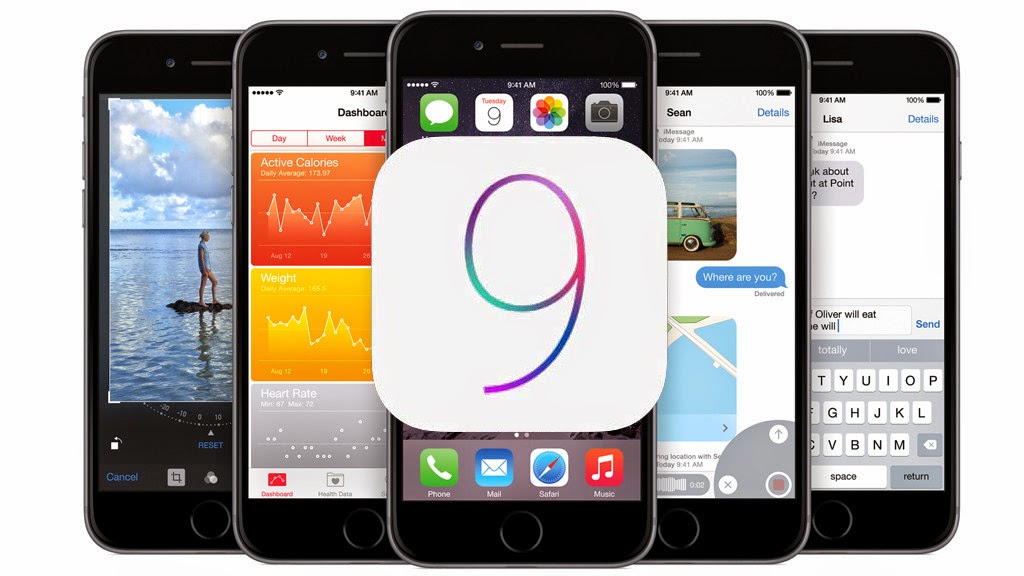
iOS 9: Possible New Features

What should Apple choose to include in its forthcoming iOS 9 mobile operating system?

Before the release of the new iPhone model later this year, Apple Inc. (NASDAQ:AAPL) will first release a new iOS 9 operating system. This is always an important aspect of any calendar year for Apple, as iOS is very much the foundation on which its mobile devices are built. This is, of course, as well an acclaimed piece of software, delivering a slick packages for the iPhone series which has led to it being a market-leading smartphone.
But what improvements can Apple make in iOS 9? Here are some suggestions for features that Apple fans would like to see included in the software.

iOS 9 Features:

Homescreen

The Android operating system certainly has its fans, and Google Inc (NASDAQ:GOOG) (NASDAQ:GOOGL) has worked hard to close the gap on iOS in recent years. One area that it has dealt with extremely well is that of the homescreen, which can appear a little cluttered on an iPhone. So Apple should look to improve the layout of the homescreen when iOS 9 is released.

Themes

Another criticism of iOS, and indeed Apple in general, is that it is not customizable enough. One example of this is the fact that the iOS operating system gives users very little choice in terms of themes. Apple could make a step forward with iOS 9 by offering users the opportunity to effectively wind back iOS 9 to an earlier layout of the operating system, as well as offering skins and themes with the software.
Read more Click here / www.advante360.com

Friday, 3 April 2015

Microsoft Office Lens Comes to iOS, Android

Microsoft's smartphone-compatible pocket scanner, Office Lens, is available in full and preview versions on iOS and Android. 

In the time since Microsoft launched Office Lens for Windows Phone in March 2014, it's become one of the most popular free Windows Phone apps, with more than 18,500 reviews giving it an average of 4.6 stars. Now, the capabilities of Office Lens will be available on iOS and Android devices.
Office Lens is a capture app that turns a smartphone into a pocket-sized scanner. Users can capture images of documents, including menus, receipts, whiteboards, and notebooks, and then save them to OneNote so they become accessible across all devices.
The tool senses where the document's edges are, then automatically crops and enhances the photo. For images with text, it identifies words through optical character recognition (OCR), so that users can search for keywords within the photo in OneDrive or OneNote.
Images captured via Office Lens are inserted in OneDrive or OneNote in DOCX, PPTX, PDF, or JPG format. Users have the option to save, export, and share the pictures they store.
For paper documents and whiteboard content, Office Lens converts images into Word documents, PDF files, or PowerPoint presentations, so that they can be edited according to user preferences. It can also record the information on business cards and create contacts that can be stored in the phone.
The app is currently available for free on the Apple App Store. A preview version is available for Android phones on Google Play. To access the preview, Android users must first access the Office Lens Android Preview in the Google+ community, click "Join Community," then select "Become a Tester."
Read more Click here / www.advante360.com


Microsoft at 40: Read Bill Gates' anniversary email to employees

The world's largest software maker hits a milestone Saturday. Read its co-founder and former CEO's letter to employees asking them to remember the transformative properties of technology.

Forty years ago, the world's largest maker of software was nothing more than a startup, founded by two college dropouts named Bill Gates and Paul Allen.
Today, that company, Microsoft, has more than 125,000 employees, a sprawling 8-million-square-foot campus outside Seattle and its principal products running on nearly 90 percent of the world's computers. It's the third-most valuable company in the world, behind only oil giant Exxon Mobil and longtime competitor Apple.
On Saturday, Microsoft celebrates its 40th anniversary and Gates -- who served as chief executive officer for 25 years before stepping down in 2000 -- has advice for its employees to utilize in the years ahead: "Make the power of technology accessible to everyone, connect people to each other and make personal computing available everywhere."
In an email to employees Friday, Gates reiterated his commitment to the vision he laid out four decades ago that software could empower the world, and asked Microsoft never to forget what it can do to change lives. "What matters most is what we do next," he wrote.
 Gates, who has since pulled away from Microsoft yet remains an adviser to CEO Satya Nadella, focuses now on philanthropic efforts as co-chair of the Bill & Melinda Gates Foundation. His personal fortune has kept him at the top of the list of the world's wealthiest people 16 out of the last 21 years, but he's pledged to give away 95 percent of it to charity by his death. So far, Gates has poured $28 billion into his foundation.
Read more Click here / www.advante360.com


The Best SEO Tools – 2015 Edition

In the blink of an eye, new tools come and go. There are a million out there, and most new and experienced SEOs are always asking - what are the best tools out there? Which tools are definite "must haves" and which should I shelve?
In 15 years as a digital marketer, I’ve been particularly interested in searching for powerful tools that can go a long way. I’ve always believed that by revealing the right data, a good tool can open doors. So without further ado, here is a list of some of the best tools I’ve discovered, and why.

SEMrush

The first, and most powerful, way we use SEMrush is to determine if a site is healthy or not. Whenever we are doing outreach and working on link-building campaigns, we always check SEMrush to see how many keywords a site is ranking for in Google. When we find sites that have a high volume of inbound links and DA, but no keywords ranking in SEMrush, then it’s likely they’ve been penalized. We also check their organic traffic to determine if there’s a massive drop; if there is, we know to avoid reaching out to that site.
We also use SEMrush as part of our keyword research. We find the top sites ranking for a primary keyword, then see what keywords those sites are ranking for. When you combine the keyword list with a few sites in the industry, you end up with a pretty comprehensive keyword list.

BuzzSumo

Most don’t think of BuzzSumo as an SEO tool, but as a social media tool. Yet as SEO and content marketing are becoming indelibly linked, BuzzSumo is now a powerful tool in an SEO’s arsenal.
We use BuzzSumo when searching ideas for content - visual, social, and blog content. After creating a database of keywords, we then look for those keywords in BuzzSumo to brainstorm creative ways of crafting titles. When brainstorming for ideas for new infographics, BuzzSumo is usually our first stop. When figuring out popular ideas for Pinterest story boards, BuzzSumo data can be invaluable.
Read more Click here / www.advante360.com


Thursday, 2 April 2015

Microsoft Surface 3 Vs. iPad Air 2 — Can Microsoft Take On The King of Tablets?

Microsoft has finally announced the successor to the Surface 2 — unsurprisingly dubbed the Surface 3. The device is being hailed as the best in the Surface series so far, capable of even taking on the iPad Air 2.
Apple has largely dominated the tablet arena ever since the iPad was first released. As of late, however, other companies have become greater contenders. How do the Surface 3 and the iPad Air 2 compare?
Design
Apple is the undisputed king of design, and the iPad Air 2 is certainly no exception to this. The device is extremely thin and sleek and comes in color choices of silver, gold, and space gray, all of which are very classy and flashy.
The Surface 2 is a little more fun. It comes in silver, but also presents color choice for the keyboard, giving it personal flair. iPad users can also purchase a keyboard in a variety of colors, but the use of the keyboard is much more central to the Surface experience. It's quite a bit thicker than the iPad Air 2, and unlike the iPad, it features a USB 3.0 port and a Mini DisplayPort, a microSD card reader and a micro USB charging port.
The fact that the Surface 3 includes these ports makes it much more of a likely candidate for laptop replacement than a strict tablet. This is further emphasized by the device's use of the keyboard.
Processing, Storage and RAM
The Microsoft Surface 3 comes with a quad-core Intel Atom x7 processor, which is quite a high-performing processor for a device of this class. The base frequency of the processor is 1.6 GHz, and it is able to reach 2.4 GHz at maximum.
The Apple A8X processor, which is featured in the iPad Air 2, has a base frequency of 1.5 GHz. The iPad Air 2 also comes with 16 GB, 64 GB or 128 GB storage options, with 2 GB of RAM. This is similar to the Surface 3, which comes with either 64 GB or 128 GB of storage and either 2 GB or 4 GB of RAM.
Software
The Surface 3 comes with a full version of Windows 8.1, and it will be upgradable for free to Windows 10 once the new operating system is released. It also comes with a free one-year subscription to Microsoft's Office 365, making the device very business-oriented right out of the box.

Bing Ads Power Tools: Ad Insights

Want to glean deeper insights into your search ad performance? Columnist John Cosley discusses four valuable ad insights tools within Bing Ads.

In sports, politics and business, you’re only as good as who you surround yourself with. But when it comes to strategy, you’re only as good as what you know — and having the right tools to keep you informed can mean the difference between great campaign performance and mediocre results.
With that in mind, I wanted to share my four favorite ad insights tools within Bing Ads to keep you informed – and outperforming both your advertising objectives and your competition.

Top Movers

Many shifting variables can lead to account performance variations, making tough work for marketers. Top Movers is an account-level report that is generated when certain click thresholds are met. The report provides a snapshot of changes in clicks, spend, and conversion over a selected time period, identifying campaigns and ad groups with the biggest performance changes.
Top Movers suggests possible causes of performance fluctuations, whether those are internal account changes, competition or eligible search volume. Even more important, it suggests possible actions to fix those undesirable performance fluctuations.
Top Movers is a one-stop shop to check account performance, increase productivity and reduce workload. Use this tool every week to quickly monitor your account’s performance over time.
Top Movers allows you to quickly diagnose your performance variation issues by providing the drivers (Campaigns and Ad groups) and possible causes of those changes. Bing Ads goes one critical step further, suggesting actions to resolve the issues.

Auction Insights

The Auction Insights report uses display URLs to help you quickly identify advertisers who are competing in the same auction, and to strategize how to compete effectively.
The Auction Insights report is generated at campaign, adgroup, and keyword level (preferred), providing an overview of who your competition is and where you stand against them in the auction – using parameters such as impression share, average position, overlap-rate, position above-rate, and top of the page rate.
Read more Click here / www.advante360.com


Wednesday, 1 April 2015

IgnitionOne: Q1 US Paid Search Growth Strongest In 3 Years

Yahoo Bing Network gains share for third straight quarter.

The first quarter of 2015 was a strong one for the US paid search market. Year-over-year growth of 26 percent marks the highest increase in three years and the third-highest rate since advertising technology firm IgnitionOne began recording performance.
Bing Ads continued its growth streak among advertisers on the IgnitionOne platform. Advertising spend share on Bing Ads rose to 26.9 percent compared to Google’s 73.1 percent share. (More on that below.)
IgnitionOne cites the improving US economy and rising cost-per-click (CPCs) in mobile for the strong growth seen in the past two quarters. Spending on smartphones rose 81 percent from Q1 2014.

Overall, CPCs rose 21 percent year-over-year, with Google CPCs up 23 percent and Bing Ads up 15 percent. IgnitionOne adds that Google’s change to require “close variant matching” last September (exact and phrase match keywords can trigger ads for close variants and plurals and misspellings of these keywords) also led to higher CPCs.
Quarter-over-quarter, ad spend rose 10 percent and CPCs were up 21 percent even after coming off a strong holiday season.

Impressions Fall As More Advertisers Back Out Of Google Partner Network

Overall impressions were down 20 percent for the quarter, the result, again, of more of IgnitionOne’s customers pulling out of the Google Partner Network. Impressions from the search partner network were off by 46 percent, clicks were down 25 percent and ad spend fell by 11 percent.
In contrast, participation on the Yahoo Bing Partner Network has been increasing. Impressions rose 46 percent and spend was up 30 percent year-over-year on the partner network. IgnitionOne notes that the flexibility in being able to exclude poor performing partner sites on the Yahoo Bing Partner Network — unlike Google, which is an all or nothing opt-in — allows for greater efficiencies.

Bing Ads Gains Share, Slowly

The numbers aren’t earth shattering, but the three-consecutive quarters of growth in market share by Bing Ads is notable.
Q1 marks the highest spend share Bing Ads has seen since the Yahoo Bing Network formed in 2010 and the lowest share for Google since 2008 among IgnitionOne customers.

Read more Click here / www.advante360.com

Saturday, 28 March 2015

Microsoft and Yahoo likely to end US search alliance as Google remains market leader

Internet giants Yahoo and Microsoft failed to make progress with their renegotiation of a ten-year search deal that was made by the companies' former bosses to rival Google.
The companies have extended the deadline to re-negotiate the deal by 30 days, signalling a possible break-up between them.
The partnership agreed in 2010 allowed Yahoo to use Microsoft Bing's search technology and Microsoft's search-based advertising system. The partnership was pioneered by Carol Bartz and Steve Ballmer, who were heading Yahoo and Microsoft respectively.
The agreement included a provision for Yahoo to exit its search alliance with Microsoft within a 30-day period after 23 February, 2015, provided Yahoo's 12-month average revenue per search in the US was less than an undisclosed percentage of Google's estimated 12-month average revenue per search in the US.
In a regulatory filing, Yahoo said the companies amended the terms of the search alliance agreement, extending the time until late April to terminate the deal.
According to the initial agreement, the search alliance would remain in effect for another five years if there was no exercise of option to exit. Therefore, the extension could mean that Yahoo may be planning to opt out of the alliance.
Microsoft and Yahoo declined to comment on the negotiations.
Before the partnership, Microsoft and Yahoo together handled about 28% of Web searches in the US. In February, their combined market share amounted to 32.6% of US desktop searches, while Google controls roughly two-thirds of the US search market, according to comScore Inc.
Read more Click here / www.advante360.com
 

5 PPC Testing Myths & Mistakes: How To Avoid Them!

Columnist Mona Elesseily has run a lot of landing page tests over the course of her career -- and seen a lot of these mistakes repeated over and over again.

Tons of new ads are created each year worldwide, so how do you know yours will make the grade? The answer is to test, measuring your ad copy/design against possible alternatives to determine which iteration produces the best results.
But there are lots of myths and mistakes being made when it comes to testing PPC ad copy and design. This article will bust some of those PPC myths/mistakes and help you improve your overall PPC revenue. If you’re super smart, you’ll also incorporate winning test data into other aspects of your online marketing like SEO, website copy, Facebook advertising and more.
You can be a winner at PPC advertising if you take heed and avoid the pitfalls of A/B testing below.

Myth #1: You Should Test Everything All The Time!

It’s true that you should do lots of testing – but it’s very important to take your time and develop a testing plan!
Many folks feel the need to get a running start and to test every element they can come up with, and this is exacerbated by the availability of inexpensive testing tools. Their mantra is “Start testing right away!” or “Test everything all the time!”
My advice is slow down and plan out your testing. The goal is to really consider what you’re testing and why you’re running a test. Here are some examples of what I track for each test (I do this in an Excel spreadsheet):
  1. Testing Goal. What is the goal of this particular test? An example might be to determine the most valuable free shipping threshold offer.
  2. Testing Execution. What elements am I going to test to achieve my testing goal? For the free shipping example, you might test alternative threshold values and the messaging of the free shipping offer.
  3. Technical Level Of Execution. How much technical work will this test require? The folks responsible for the landing page can directly make comments on this part of the spreadsheet.
  4. Creative Level Of Execution. How much creative work will this test require? The folks responsible for the creative could add suggestions here.
  5. Test Executed? This lets folks know the test was deployed.
  6. Test Evaluation. What were the results of the test? How did the test version fare against the baseline? Following our example above, you might note that there was an increase in conversion rate with no negative impact on shipping costs.
  7. Iterated Upon? We’ll talk more specifically about iteration later in this article.
Without a plan, you may be able to periodically hit the “testing ball” out of the proverbial park, but your testing efforts will not be forward-moving and iterative. Another big mistake is that companies don’t keep track of their tests and often run the same tests. A solid testing protocol or system prevents this.

Myth #2: A Large Majority Of Tests Kill It!

The sad reality is that most people spin their wheels when it comes to testing, and the deck is stacked against them from the get-go.
Based on my own research and experience, I would say that tests are more likely to fail — that is, have no meaningful impact at all, positive or negative. Furthermore, of the small minority of tests that do have a notable result, about half will negatively impact the bottom line!
To add more salt to the wound, very few tests with a positive impact really “knock it out of the park.” The deck is stacked against testers that don’t know what they’re doing!
Read more Click here / www.advante360.com